
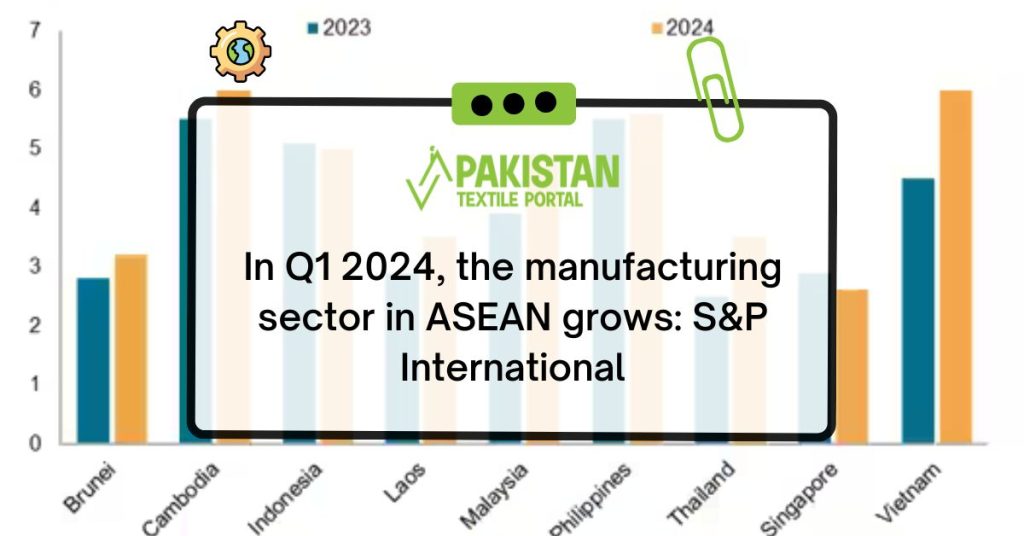
S&P Global reports that as of the end of the first quarter (Q1) of 2024, the manufacturing sector within the Association of Southeast Asian Nations (ASEAN) was growing at an accelerated rate. The main S&P Global ASEAN manufacturing purchasing managers’ index (PMI) rose from 50.4 in February to 51.5 in March, indicating the strongest improvement in operational conditions in over a year.
Since February, price pressures have lessened. Output charges and cost burdens increased at the slowest rates in the last eight and three months, respectively.
March saw an increase in new orders for the first time in seven months, which helped to revive demand for ASEAN-made goods. It was the quickest rate of expansion since the middle of 2023. However, it seemed that domestic demand, rather than foreign markets, was the main driver of the most recent upturn. According to S&P Global, the decline in new export orders really intensified and prolonged the present decline to 22 months.
The increase in new orders has resumed, which supported output growth. This was the biggest upturn in ten months. Additionally, backlogs increased in March for the first time since June of last year, albeit very slightly. For the second consecutive month, companies increased their workforce levels due to increased production requirements; nevertheless, the increase was only slightly faster than before. Purchase activity increased as well. In the present five-month sequence of expansion, the most recent upturn was the strongest ever observed.
Even when demand conditions improved, average vendor performance in terms of input delivery timeframes were mostly stable.
Improvements in working conditions were mostly focused on the manufacturing industries in Singapore and Indonesia. The Philippines, meantime, saw very little change. In other news, the industrial sector in Vietnam reported almost unchanged operating conditions in March, whereas the three other ASEAN members—Thailand, Malaysia, and Myanmar—all reported worsening conditions.
In general, people in the region had hopeful views about the future. Still, the level of confidence fell to an eight-month low and remained historically low.

