
According to new industry research done by Fibre2Fashion, synthetic textiles derived from man-made fibres such as polyester and plant-based cellulose are predicted to outnumber cotton fabrics in the next decades. Population increase, restricted cotton output, and rising cotton costs are all factors impacting this paradigm change, as are industrial uses and growing consumer awareness of sustainability.
Man-made fibers are an enticing alternative in the textile business due to their plentiful availability, durability, affordability, greater mechanical performance, and higher stability when compared to natural fibers.
According to the survey, cotton accounts for around 26% of worldwide fabric export, while synthetic textiles such as polyester and man-made cellulosic fabric account for approximately 57%. This is a major shift from the situation in 2003 when cotton accounted for around 38% of the market and synthetic materials accounted for approximately 42%. This ongoing drop in worldwide demand for cotton fabric reflects an increasing preference for synthetic alternatives.
As the uncontested center of fabric production, Asia is home to the vast bulk of the world’s manufacturing capacity. China, in particular, has established itself as the world’s biggest exporter of plant-based cellulosic textiles.
The research projects a strong increase in synthetic fabric exports, with a compound annual growth rate of 3% over the next five years. The global market for synthetic textiles is expected to reach $87 billion by 2027, driven mostly by rising demand for plant-based cellulosic materials. With a global export value of $75 billion expected in 2022, Asia’s essential position in this development narrative is evident.
Global synthetic fabric exports against cotton fabric exports
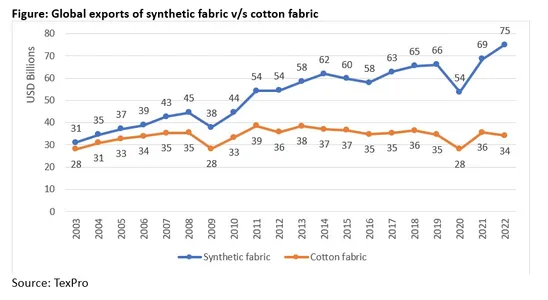
Image source: TexPro
On a worldwide scale, the consumption of garments manufactured from man-made fibers has grown at a consistent yearly pace of around 5% over the previous two decades. Because of this constant expansion, synthetic textiles currently account for more than half of the overall global fabric market.
The transition towards man-made fibers appears to be a long-term trend, with Asia prepared to meet the world’s growing textile demands. According to the survey, the future of the global synthetic fabric industry is positive, owing to continual breakthroughs in man-made cellulosic materials and Asia’s unrivalled production capabilities.

