

Shahid Sattar and Noreen Akhtar
With the rising global trends in fast fashion, the export of textile waste or unwanted clothes to destinations outside the EU has steadily increased. This export reached 1.4 million tonnes in 2021. Around 2.1 million tonnes of post-consumer clothing and home textiles are collected in the EU annually for recycling or sale on global reuse markets. This represents approximately 38% of textiles placed on the EU market. The remaining get discarded in the mixed waste streams.
Pakistan is one of the dumping grounds for post-consumer textile waste or unwanted clothes discarded annually from the EU. In 2021, used clothing worth 46 million USD export value was exported from the EU to Pakistan. Used clothes from the EU’s high streets end up reaching resale markets and dumping sites in the country. In the absence of efficient traceability criteria and waste hierarchy in both the EU and Pakistan that distinguishes between textile waste and secondhand textile products, the textile waste streams falsely labelled as secondhand clothes are imported to Pakistan, a significant portion of which adds to the already mounting ecosystem challenges in the country. The unregulated waste streams of used clothing and lack of their recycling not only cause more GHG emissions and unsustainable water consumption, as this leads to the manufacturing of more new clothing but also causes an increase in the dumping of textile waste in landfills.
EU is now giving utmost consideration to sustainability, promoting textile circularity, and regulating the export of textile waste streams to other nations. EU’s legislative reforms will change the game for Pakistan’s textile and secondhand clothing industry, which will not only significantly minimize the dumping of textile waste but also support the alignment of the current textile business models with the textile circularity business models.
CURRENT SCENARIO
Affordability and business through resale platforms are the massive forces behind large imports of used clothing from the EU to Pakistan. With the growing economic crisis, consumers have become mindful of their expenses, and their preference for secondhand clothing, which is believed to have superior quality, has grown. Pakistan has a vast textile resale market that resales imported used clothes, some of which are recycled while most are sold directly. This expansion of the secondhand clothing market in the country is not only a pushback against the mounting fast-fashion systems but also poses fewer environmental consequences compared to the fashion industry and manufacturing of new textiles. For instance, recycling and reshaping secondhand clothes emit fewer GHGs and cause less water pollution than the emissions and pollution from new clothing production. However, the inflow of unregulated textile waste streams, falsely labelled as secondhand clothing, and unmonitored dumping of textile waste is a rising environmental concern and a challenge to promote textile circularity in Pakistan.
Pakistan has considerable potential to recycle and redesign used textiles. The current scenario indicates that some industries recycle imported used clothes, but the progress is not significant, and central portions of these clothes enter resale markets and dumping sites directly. For instance, Karachi Export Processing Zone (KEPZ) greatly benefits from the used textile industry. It recycles and resales imported used clothes globally. Given the preference for the use of recycled material in new clothes, if industries are channelled into the recycled fashion market, the recycling and redesigning of imported and locally generated used clothes can become a significant business market for Pakistan.
Recycled Polyester Staple Fiber (rPSF) is a highly suitable alternative for the industry to promote business through recycled fashion. The instalment of recycling plants to produce rPSF can uplift and green the industry’s business development, as it is the most preferred recycled content. rPSF has a vast business potential for brands and is now gaining high popularity. It supports sustainability and compliance with the Global Recycling Standards (GRS) due to various desired physical properties, including higher strength, low moisture absorbency, high elasticity, and comparatively easy production.
Textile circularity is now a matter of utmost attention for Pakistan’s textile industry. The industry is currently experiencing a massive transition from only manufacturing new textiles without strategies to ensure their circularity to initiating circular business models, with a significant focus on eco-designed textile products and recycling of used textiles. From knowledge dissemination to preparing skilled labour, implementing sustainable business models, and upscaling technology, textile companies are actively internalizing the EU’s guidelines and strategies to achieve zero waste targets. The progress, however, needs to be enhanced in the entire industry through coordination, the right financial allocations, and training.
THE NEXT BIG THING
EU Strategy for Sustainable and Circular Textiles will enormously transform the textile production patterns in Pakistan. Driving fast fashion out of fashion by reversing overconsumption and overproduction is a primary target of the strategy. The industry must adopt resource-efficient manufacturing processes and circular business models. This will promote the manufacturing of superior quality clothing and the recycling of secondhand clothes, thus causing a massive shift in the consumers’ preference towards recycled secondhand textile products.
With the motto of #ReFashionNow, the EU is underlining the introduction of eco-design requirements for textiles, including quality, durability, longer use, repair, and reuse of textile products, ultimately decoupling textile waste generation from the growth. The textile industry will experience mandatory requirements to give a second life to used textiles, which will require significant shifts in industrial functioning. This will require skilled labour, efficient policies for waste hierarchy and collection, and technical progress for recycling and treatment of used clothes.
As the EU’s strategy for textile circularity is getting stricter, the information requirements to track the origin of all the textile products via traceability mechanisms are also becoming a norm in the EU’s green economy plan. Through its Digital Product Passport initiative, the EU is introducing mandatory information requirements on circularity and vital environmental aspects of textiles. This indicates that traceability mechanisms will gradually become applicable to secondhand textile products in the EU and Pakistan. From the export of secondhand textiles to their recycling and reuse points, this mechanism will trace all the necessary information of the product’s lifecycle, thus reducing dumping of the used textiles to the minimum.
Digital Product Passport is a milestone initiative to deal with greenwashing, which misleads buyers by giving a false impression of the company’s environmental footprint. The EU’s criteria to avoid greenwashing are getting immensely stringent, as the European Commission is seeking to define all greenwashing tactics (figure 1) and disseminate information about them. While this will give enormous recognition to the textile companies in Pakistan making efforts to green their products, it will also hold the poorly performing companies accountable for their high environmental footprint.
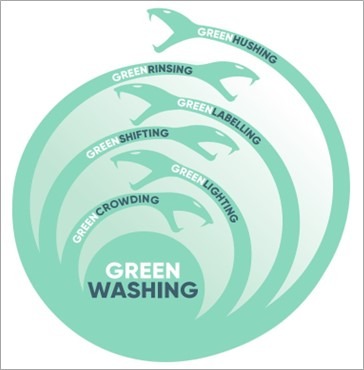
Figure 1: Main greenwashing tactics (Willis et al. 2023).
CONCLUSION
Aligning business growth with the EU’s strategy for textile circularity by focusing maximum on eco-designed new products and recycling used textiles is the next step towards a new normal for Pakistan’s textile industry, as the strategy will soon enter into force. This will not only regulate the EU’s post-consumer textile waste misleadingly labelled as secondhand textiles entering Pakistan but will also reduce the dumping of textile waste to the minimum levels.
It is a must for Pakistan’s textile industry to adopt waste hierarchy protocols for the imported and internally generated post-consumer textile waste and strengthen the traceability mechanism to trace its recycling and end-of-life points. As the EU is a top textile export destination for Pakistan and is increasingly focusing on eco-design requirements for textiles, management of post-consumer textile waste will fulfil the EU’s mounting requirements for textile circularity. The industry will observe a transition, as manufacturing superior quality textile products and recycling and exporting used clothes will dominate the industrial functioning. This will reduce the environmental footprint of the industry to a significant level and promote green economy-based industrial development.
This will require the proper financial allocations, upscaling of the current technology, skilled labour, and coordination among the relevant stakeholders for knowledge dissemination, the absence of which will affect the industry’s compliance performance compared to its regional competitors, ultimately distressing the export-based business market to the EU.
REFERENCES
European Commission. n.d.a EU Strategy for Sustainable and Circular Textiles. URL: https://environment.ec.europa.eu/publications/textiles-strategy_en
European Commission. n.d.b. Initiative on substantiating green claims. URL: https://ec.europa.eu/environment/eussd/smgp/initiative_on_green_claims.htm
Garson and Shaw. 2019. Exploring the benefits of the growing used textile recycling industry located in the Karachi Export Processing Zone in Pakistan. URL: https://www.garsonshaw.com/2019/11/exploring-the-benefits-of-the-growing-used-textile-recycling-industry-located-in-the-karachi-export-processing-zone-in-pakistan/
Generation Climate Europe. n.d. Digital Product Passport: What is it, and what does it imply for the textile industry? URL: https://gceurope.org/digital-product-passport-what-is-it-and-what-does-it-imply-for-the-textile-industry/
Park, H. and Martinez, C.M.J. 2020. Secondhand clothing sales are booming – and may help solve the sustainability crisis in the fashion industry. URL: https://theconversation.com/secondhand-clothing-sales-are-booming-and-may-help-solve-the-sustainability-crisis-in-the-fashion-industry-148403
Smith, P. 2022. Leading destinations for EU exports of used clothing 2021, by value. URL: https://www.statista.com/statistics/1099776/used-clothing-main-destinations-for-eu-exports-by-value/
Willis, J. et al. 2023. Greenwashing hydra. URL: https://planet-tracker.org/wp-content/uploads/2023/01/Greenwashing-Hydra-3.pdf

